 seolounge





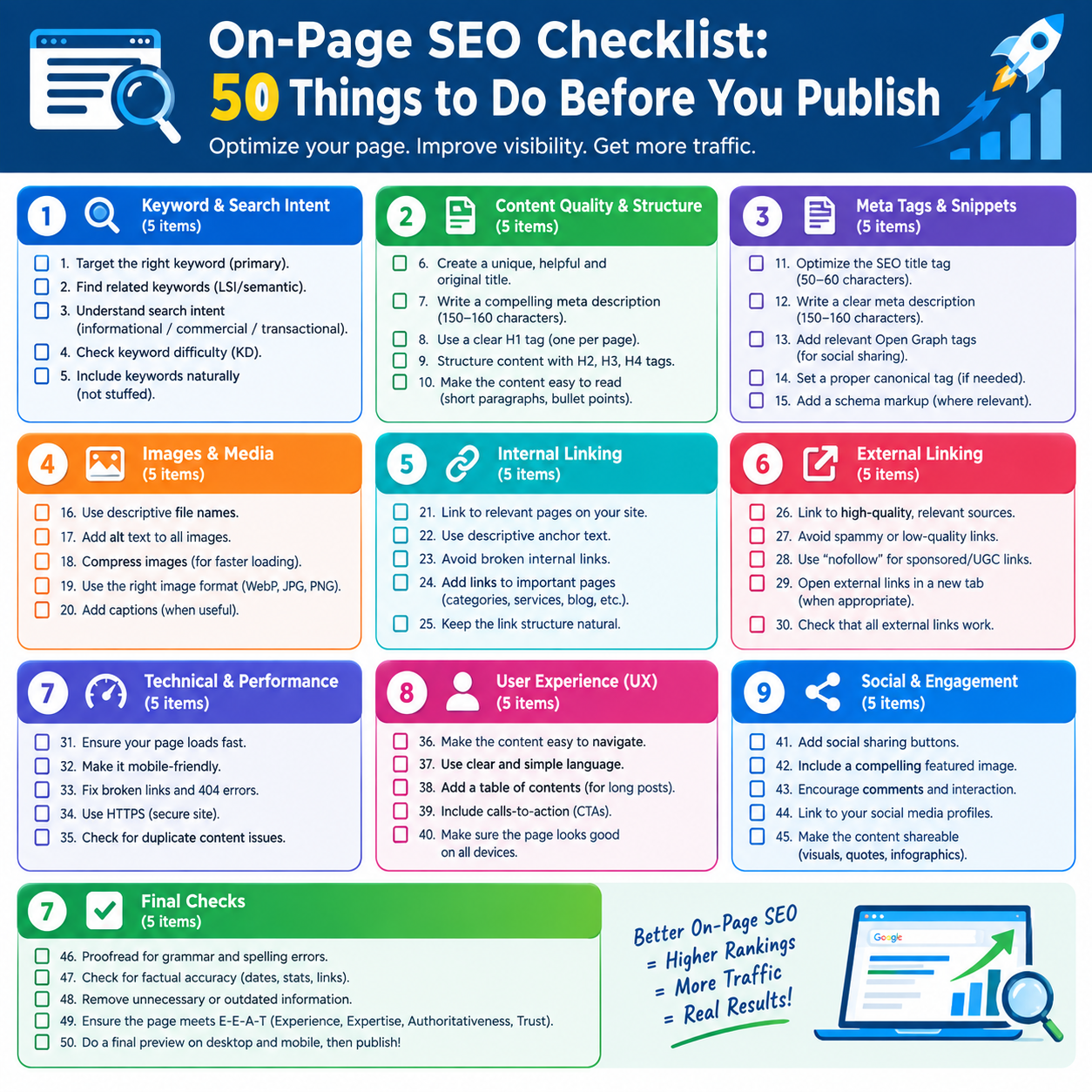
In today’s competitive digital landscape, on-page SEO remains a cornerstone of effective website optimization. It’s the foundation upon which search engines understand your content, relevance, and authority. While optimizing for SEO can seem overwhelming, having a detailed on-page SEO checklist ensures that no critical element is overlooked before hitting the publish button. Here, we present a comprehensive, step-by-step guide featuring 50 essential on-page SEO tasks to implement before publishing your content.
1. Conduct Keyword Research
Identify relevant, high-traffic keywords that align with your content’s intent. Utilize tools like Google Keyword Planner, Ahrefs, or SEMrush to uncover terms your target audience searches for.
2. Optimize Your Title Tag
Craft a compelling, keyword-rich title within 60 characters. Ensure it accurately reflects the content and entices clicks.
3. Create a Captivating Meta Description
Write a persuasive meta description (150-160 characters) incorporating primary keywords and a clear call-to-action, enticing users to visit your page.
4. Use a Clear URL Structure
Implement a short, descriptive URL containing your main keyword. Avoid unnecessary numbers or symbols for readability and SEO benefits.
5. Incorporate Keywords Naturally
Integrate primary and secondary keywords seamlessly into your content, avoiding keyword stuffing that can harm your SEO.
6. Optimize Headings (H1, H2, H3…)
Structure your content with clear headings, including relevant keywords in H1 (main title), H2s, and H3s to improve readability and semantic understanding.
7. Ensure Unique Content
Write original, high-quality content that provides value to your readers and differentiates you from competitors.
8. Include LSI Keywords
Use Latent Semantic Indexing keywords to enhance topical relevance and semantic richness of your content.
9. Add Internal Links
Link to other relevant pages within your website to improve site structure, increase dwell time, and distribute link equity.
10. Insert External Links
Cite authoritative, relevant sources to strengthen your content’s credibility and provide added value to your readers.
11. Optimize Images
Use descriptive, keyword-rich file names and fill out alt text with relevant keywords to improve image SEO and accessibility.
12. Compress Images for Speed
Reduce image file sizes without quality loss to ensure fast page load times, a crucial factor for SEO.
13. Use Mobile-Friendly Design
Ensure your page is responsive and displays correctly across all devices, considering mobile-first indexing.
14. Improve Page Loading Speed
Optimize code, leverage browser caching, and minimize HTTP requests to enhance your page’s load time.
15. Implement Structured Data Markup
Use schema.org markup to help search engines better understand your content, enhancing rich snippets and featured snippets.
16. Set Up Canonical Tags
Specify canonical URLs to prevent duplicate content issues and consolidate link signals.
17. Optimize for User Experience (UX)
Ensure easy navigation, clear calls-to-action, and readability to keep visitors engaged.
18. Add Social Sharing Buttons
Facilitate content sharing across social platforms to increase reach and potential backlinks.
19. Check for Broken Links
Use tools to find and fix broken internal and external links, preserving SEO integrity and user experience.
20. Ensure Accessibility
Follow accessibility best practices, including proper contrast, font size, and ARIA labels, broadening your reach.
21. Utilize Readability Tools
Use tools like Hemingway or Yoast SEO to ensure your content is clear, readable, and well-structured.
22. Optimize for Featured Snippets
Format your content to answer common questions with clear headings and concise, well-structured answers.
23. Include Clear Calls to Action
Guide visitors on the next steps, whether subscribing, contacting, or purchasing, to improve engagement metrics.
24. Verify Analytics Integration
Ensure Google Analytics and Google Search Console are properly configured and tracking data correctly.
25. Set Up 301 Redirects
Implement redirects for any content that has moved or been deleted to preserve link equity and SEO value.
Additional Technical and Content Checks
26. Ensure No Duplicate Content
Use canonical tags and proper content management to prevent duplication issues that dilute SEO efforts.
27. Check for Keyword Cannibalization
Verify that similar pages aren’t competing for the same keywords, which can confuse search engines.
28. Optimize Content Length
Aim for comprehensive content—usually between 1,000 and 2,000 words—that thoroughly covers the topic.
29. Add an Engaging Introduction
Hook readers with a compelling introduction that clearly states the value and purpose of your content.
30. Balance Keyword Density
Maintain an optimal keyword density (generally around 1-2%) without compromising natural flow.
31. Format Content for Skimmability
Use bullet points, numbered lists, and short paragraphs to enhance readability and user engagement.
32. Include Multimedia Elements
Add relevant images, videos, or infographics to diversify content and support SEO efforts.
33. Optimize for Local SEO (if applicable)
Incorporate location-specific keywords and add your business to local directories for local search prominence.
34. Monitor and Adjust Title and Metadata
Test variations of your titles and descriptions to improve click-through rates over time.
35. Implement SSL Certificate
Ensure your website uses HTTPS for security and trustworthiness, which search engines favor.
Pre-Publication Final Checks
36. Proofread for Grammar and Typos
Eliminate errors to maintain professionalism and readability.
37. Check Schema Markup Implementation
Verify the correct implementation of structured data via Google’s Rich Results Test.
38. Test Mobile Compatibility
Use Google’s Mobile-Friendly Test tool to guarantee optimal performance on mobile devices.
39. Use a Content Checklist Tool
Employ SEO plugins like Yoast SEO or Rank Math to identify potential issues directly within your content management system.
40. Validate Page Indexation
Ensure your page is set to be indexed and not marked as noindex in meta tags.
41. Confirm Analytics is Tracking Correctly
Test conversion tracking, event tracking, and goals are functioning properly.
42. Verify No Crawl Errors
Use Google Search Console to identify and fix crawl errors before publishing.
43. Optimize for Voice Search
Incorporate conversational keywords and question-based phrases for voice search optimization.
44. Set Up Social Media Metadata
Add Open Graph and Twitter Card tags to optimize sharing previews.
45. Review Content for Consistency
Ensure tone, style, and branding are consistent throughout the content.
Post-Publication Considerations
46. Submit Your Sitemap
Notify search engines about your new content via sitemap submission or index request.
47. Promote Your Content
Share across social media channels, email newsletters, and relevant online communities to increase visibility.
48. Monitor Performance Metrics
Track rankings, traffic, bounce rates, and engagement to refine ongoing SEO efforts.
49. Update Content Regularly
Refreshing your content with new insights or data helps maintain and improve its relevance.
50. Gather Feedback
Encourage reader comments and feedback to improve future content and SEO strategies.
Conclusion
Implementing this detailed on-page SEO checklist before you publish ensures your content is fully optimized for search engines and highly engaging for your audience. By paying meticulous attention to each element—from technical aspects to content quality and user experience—you lay a solid foundation for your SEO success. Remember, SEO is an ongoing process; regular audits and updates will maximize your content’s visibility, authority, and long-term performance in search results. Stay proactive, and let your on-page SEO strategies drive organic growth and digital success.